Jacob Kunselman · Apps
2026-10-25
Podcasts, books and the Bible: three apps I own
AI agents built them in a week. They run on a Raspberry Pi in my garage, work on my phone with no signal, and every one of them knows what was said in the others.
Have an AI agent? It can build these for you. Point it at this page; there is a section for it at the bottom.
Why
The apps I used for listening and reading were rented. The podcast app wanted an account and kept my history on its servers. The Bible app put its best study tools behind a subscription. The reading apps wanted me in their store. None of them worked well without signal, and none of them knew about the others. When a preacher quoted Romans or a host recommended Bunyan, it was gone by the next episode.
So I described what I wanted to Claude Code, one app at a time, in a sentence or two:
- "Build me my own podcasting app that gets new podcasts for me when they are available and downloads them for offline, chapters, album art, etc."
- "A Bible … multiple translations all linked together by chapters and verses. I can add bookmarks with dates. Run podcasts through it and bookmark all the Bible references."
- "Anything public domain that is mentioned in a podcast I want it downloaded and text searchable."
The agents did the rest: they wrote the code and the tests, and they found and checked every source and every licence. I used each app every day and said what was wrong.
The shape
One small computer, three small servers, three installable web apps.
- A Raspberry Pi 5 in the garage does the work. It checks the feeds, downloads the episodes, builds the indexes and serves the apps. Each server is a Python file with no framework, about as much machinery as a well pump.
- The apps install from Chrome onto my phone, my laptops and the TV, and keep everything they need on the device: the episodes I'm likely to play next, the whole Bible with its study tools, and every book. On a plane they all still work, and the Bible and the books still search every word.
- They're private. They're served only inside my own network (Tailscale), so there's no login, no account, no ads and no tracking. Where I stopped carries between my phone, laptop and TV.
- Everything in them is free to keep. Public-domain texts, open data with its licence followed, podcasts from their public feeds. Where a source's terms said no, it was left out, and the README says why.
Podcasts
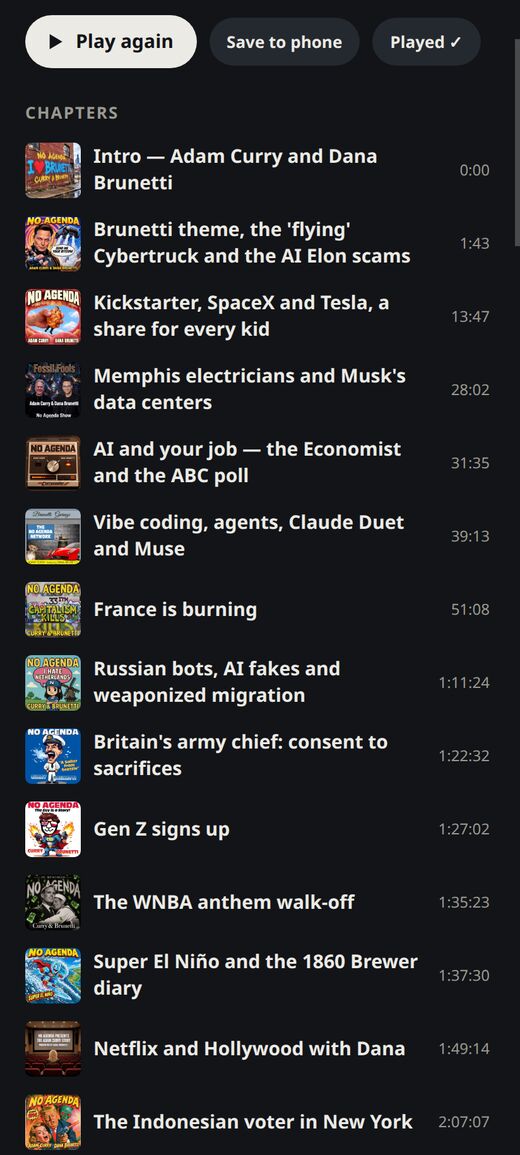
Every episode of the shows I follow, ready before I want it. Every ten minutes the Pi reads each show's feed and downloads anything new, with its art, its chapters (each with its own picture) and its transcript. The phone keeps the next two episodes of every show by itself and lets go of the ones I've finished.
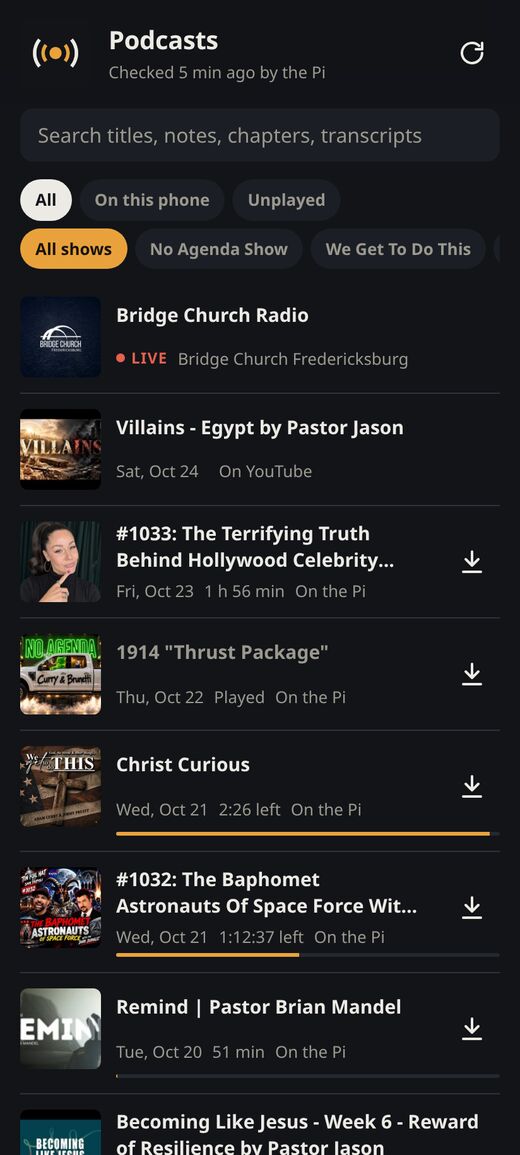
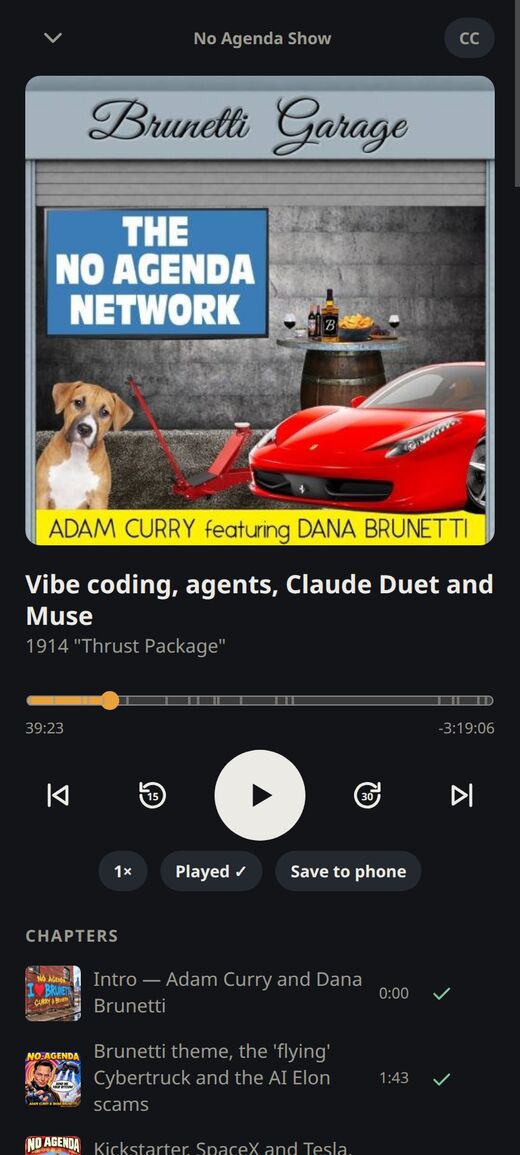
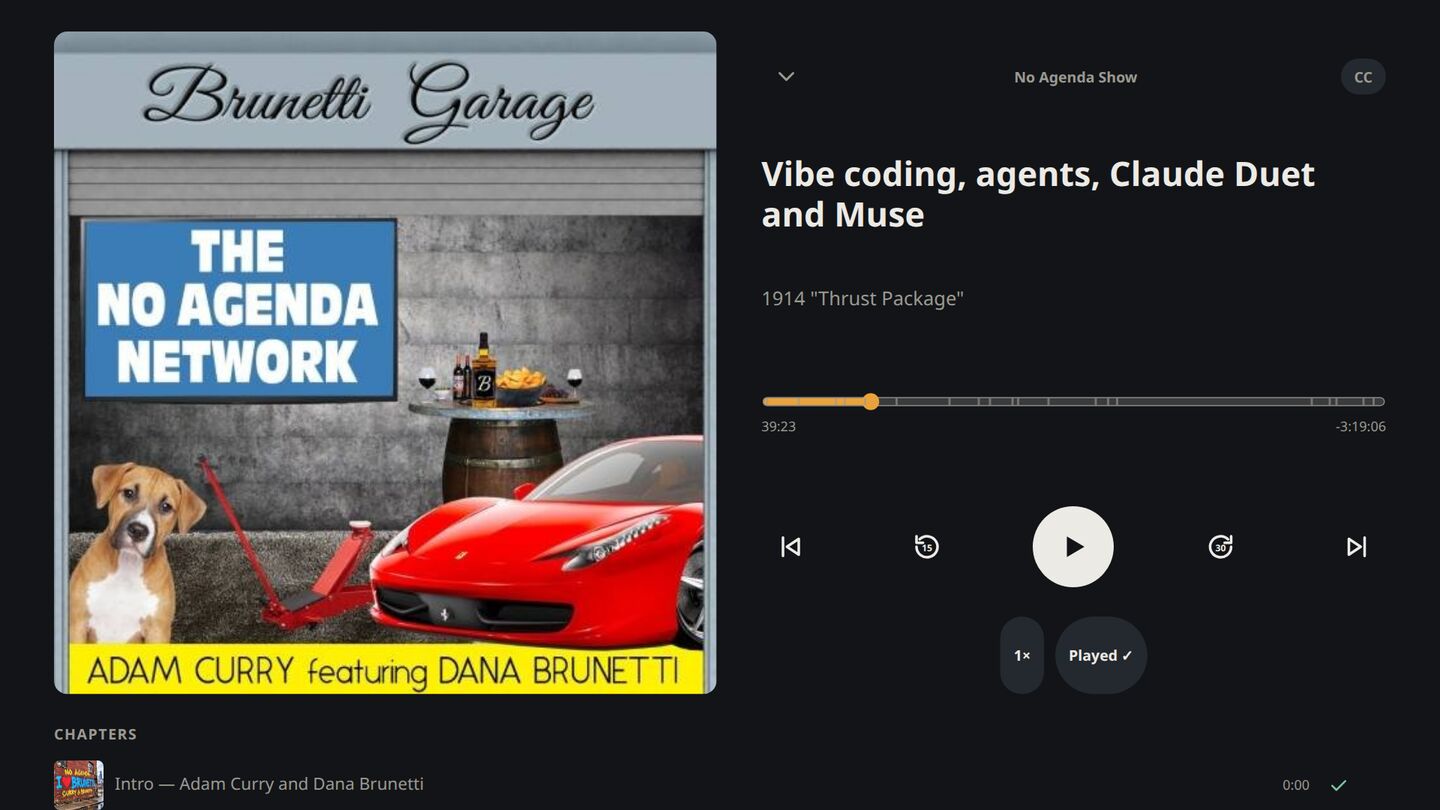
- Chapters everywhere: marked on the scrubber, in a list, and on the lock screen, where the track buttons skip a chapter. The app remembers which chapters I've heard.
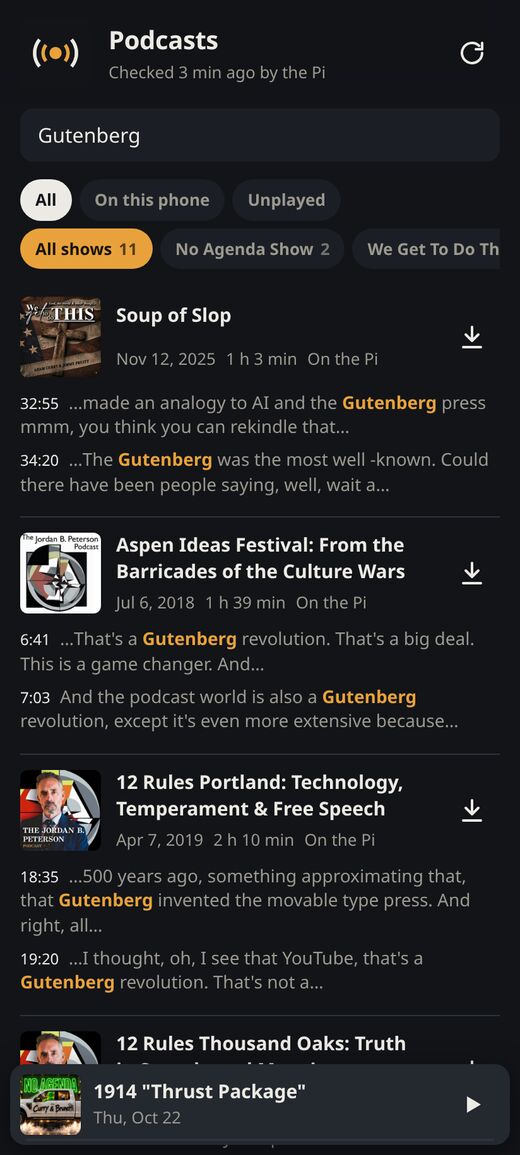
- Search every word ever said. Shows that publish transcripts get theirs; the rest are transcribed by Whisper on my laptop's graphics card, at 79 times real time. A search lists every moment, and a tap plays from there.
- On the TV, too: a 33 KB Android TV app wraps the same page. The remote moves a highlight, and while something plays, Back then OK pauses it from anywhere.
- Old shows, whole: Jordan Peterson's lectures from before 2021, the Biblical Series and Maps of Meaning among them, 266 hours, all searchable down to the moment.
The Bible
Ten translations lined up verse by verse, from the Berean Standard Bible to the 1599 Geneva, plus R.H. Charles's Enoch and Jubilees. Pick any of them to read side by side; tap a verse and it's there in every one. Each translation is one that's free to keep. The ones that aren't, I still own on paper.
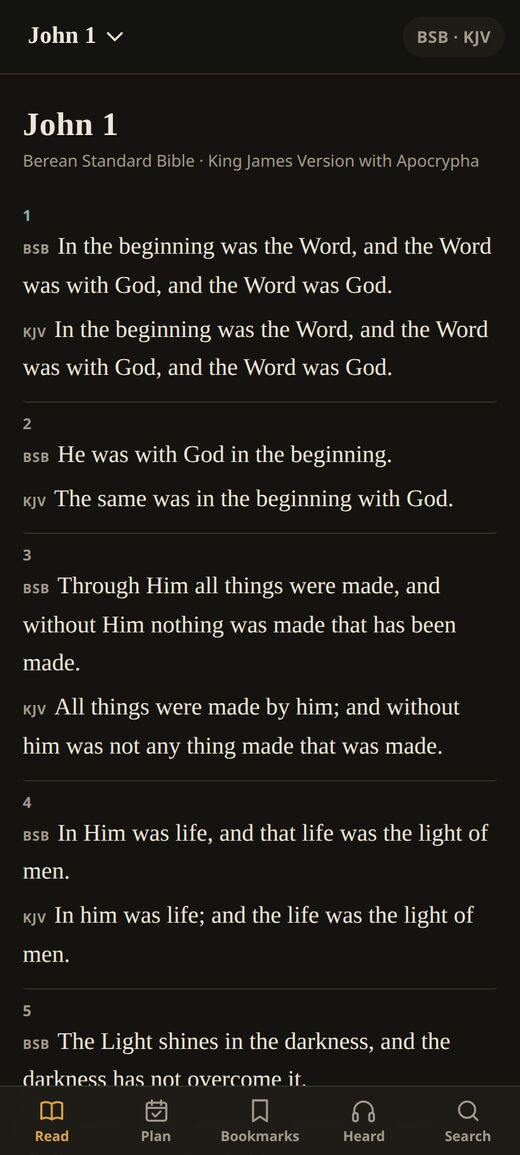
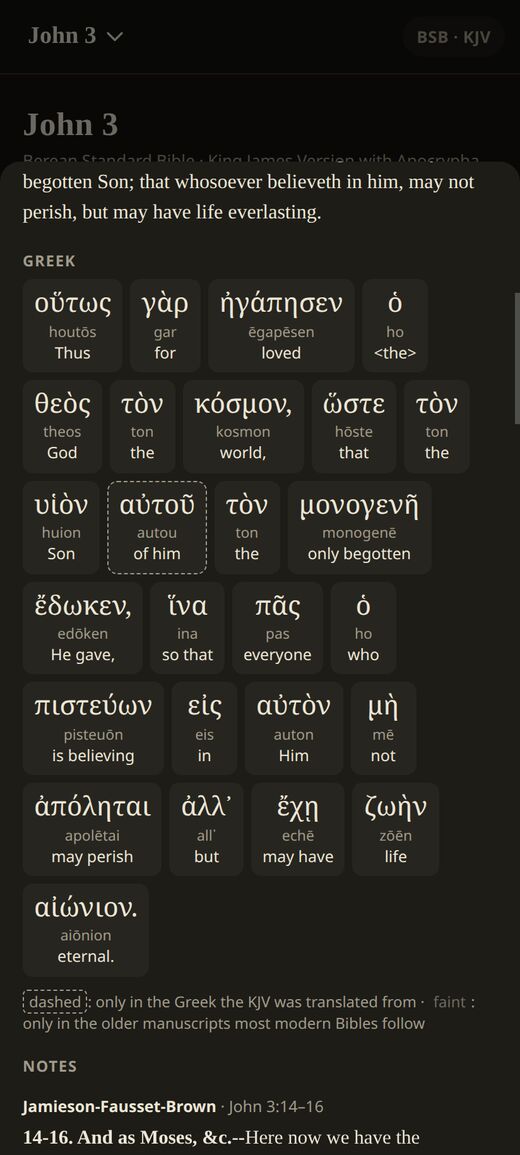
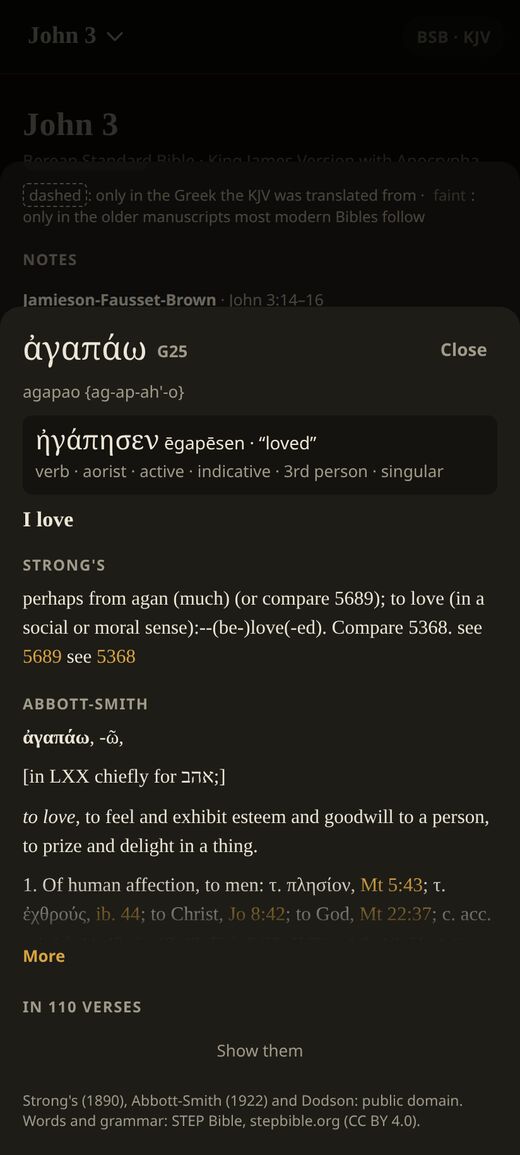
- The Hebrew and Greek under every verse, 447,276 words, each with how it sounds and what it means. Tap a word for its grammar in plain English, Strong's entry, the Abbott-Smith lexicon and every verse it appears in.
- The study shelf other apps charge for: Jamieson-Fausset-Brown and Matthew Henry, Nave's Topical Bible, Easton's dictionary, 343,571 cross-references, and Spurgeon's Morning and Evening for the day.
- Every verse the podcasts quoted. The Pi reads every transcript for references said aloud ("first Corinthians thirteen", "Psalm one nineteen") and for verses quoted without a name, and lists them by episode. A tap plays that moment in the podcast app.
- The Bible in a year, three ways, with a check box and a date for every day. Plus dated bookmarks with notes, kept in step across devices.
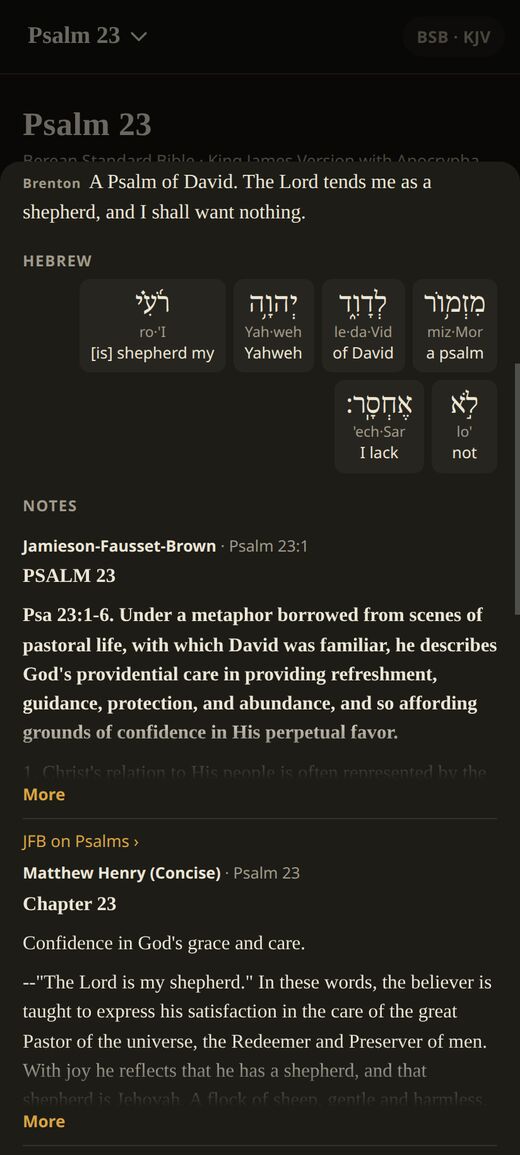
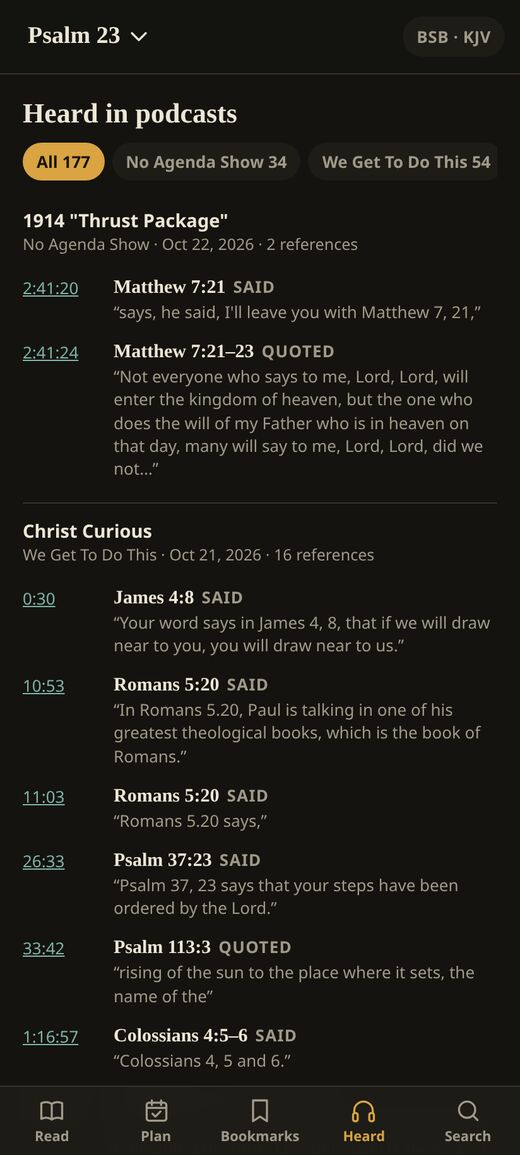
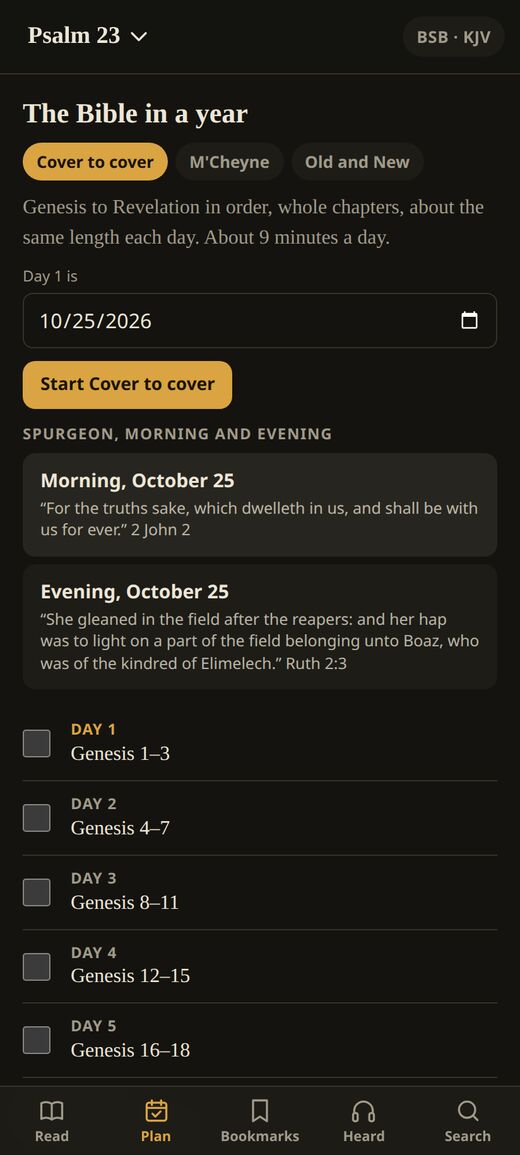
How sure is "heard"? I read the hits against the transcripts until a random 40 of each kind, said and quoted, came back 40 for 40.
Books
Every public-domain book the podcasts mention, downloaded and searchable. When a host says "Dostoevsky's Crime and Punishment", or a pastor brings up The Pilgrim's Progress, the book arrives from Project Gutenberg, and its page lists every moment it came up. A tap on one plays it in the podcast app.
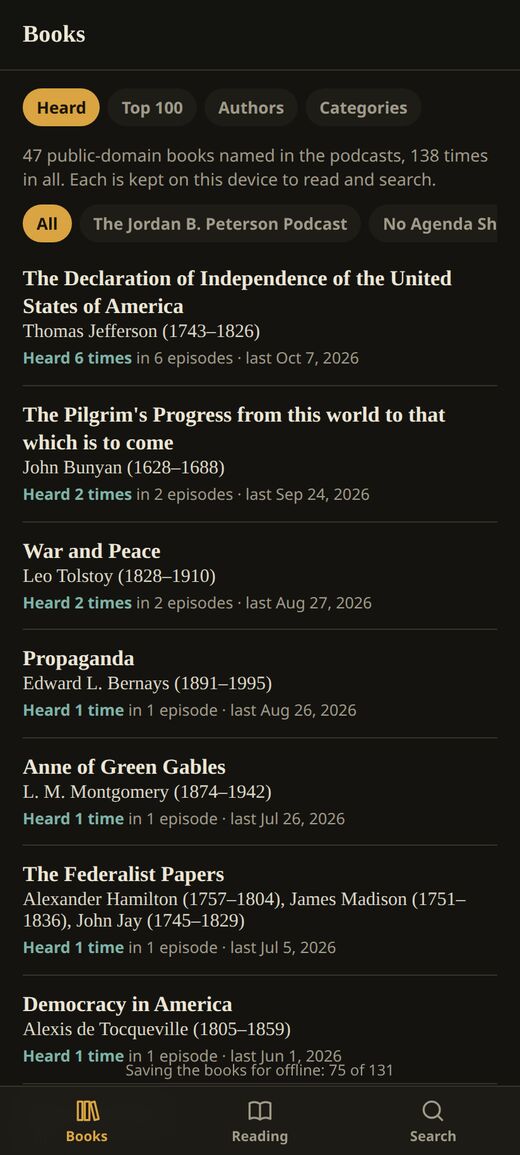
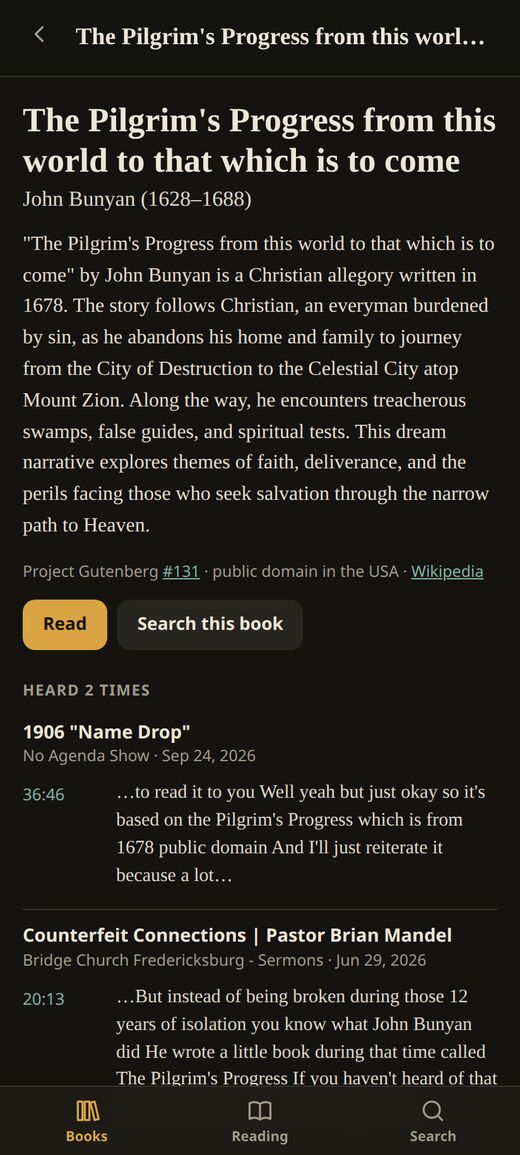
- It has to be sure it's the book. A title counts with its author named nearby, or alone only when it's famous and can't be anything else. "Milton Friedman" isn't Milton, and crime and punishment in lower case isn't Dostoevsky. Every one of the 138 it found was read against its transcript.
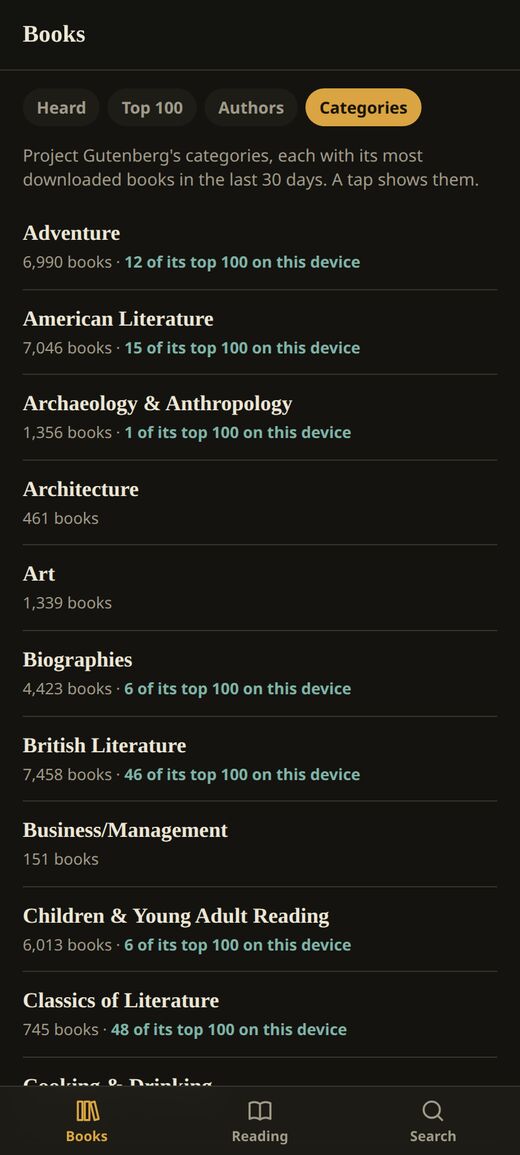
- Gutenberg's Top 100 books are kept too, along with the top authors and the top 100 of each of Gutenberg's 72 categories. Any book on those lists is a tap away.
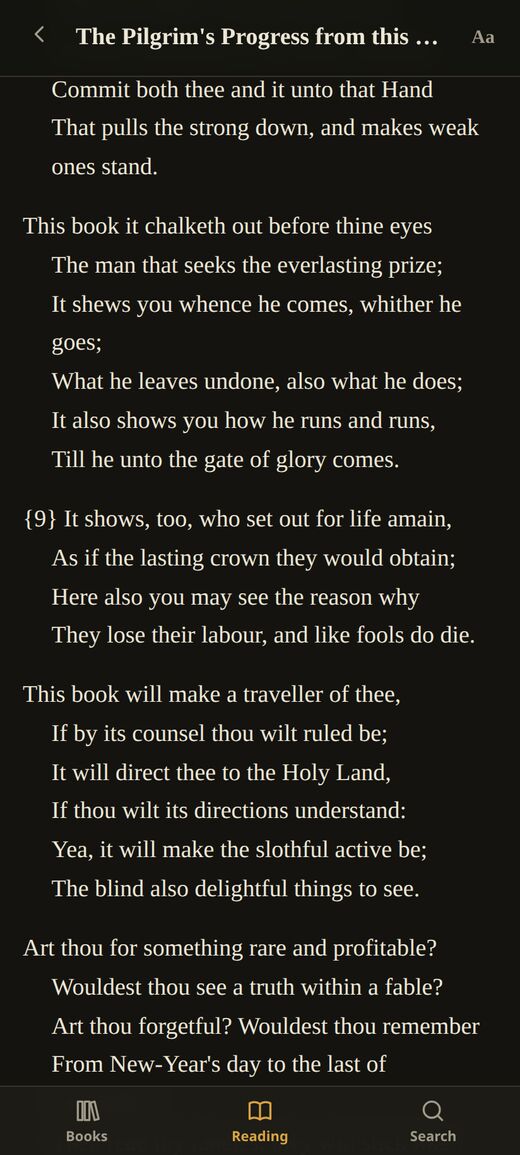
- A reader made for reading: serif type, poetry kept as poetry, the place kept, and search inside one book or all of them, offline.
Done carefully
What I care about most here can't be seen in a screenshot.
- Only what's free to keep. One site offered every commentary as tidy JSON, but its terms let you keep a copy for only 30 days, so the agent went to each publisher's own files instead. My NIV and NKJV stay on the shelf.
- Polite to the sources. Books come from Gutenberg's mirror one at a time with a pause between, as their robot policy asks. A church that posts its sermons only on YouTube gets them indexed and linked, not downloaded.
- Nothing downloaded just to be thrown away. Whisper only transcribes audio that's already on the Pi.
- Checked by reading. Every finder was measured by reading what it found against the transcript, and each false hit became a test.
- The Pi stays responsive. The batch jobs run at low priority on two of its four cores, and the heavy jobs go to the laptops.
What bit
- Ranking by downloads put Punch first. Hundreds of issues of one magazine add up. Each book is now ranked by its best single edition, the way Gutenberg ranks its Top 100.
- Captions write verses strangely:
Daniel 2 .21,Isaiah 8 -12,John 1135. Each one is a rule now, with a test. - The TV froze. The list drew all 2,180 episodes and their full-size art, about 2 GB of pixels on a 2 GB box. Now it draws 60 rows at a time with 13 KB thumbnails, and a redraw takes 0.1 s instead of 2.7.
- Feeds lie about length. One show's ad-inserted audio ran nearly ten minutes past what its feed said, so transcript times come from the Pi's own copy.
- Two Bibles count the Psalms differently. In Douay-Rheims and the Septuagint, Psalm 23 is Psalm 22. They're mapped, so the verses line up.
By the numbers
- 8 shows, 2,180 episodes, 593 transcripts searchable to the moment
- 10 translations and two books of Ethiopia's canon, 447,276 Hebrew and Greek words, 343,571 cross-references, 21,004 commentary notes, and 113 MB to keep it all on the phone
- 2,132 Bible references found in what the podcasts said
- 61,188 public-domain books in the catalog, 131 kept on the phone
- 1 week from the first app to the third, and 0 subscriptions
For your AI agent
This part is for your agent. The apps are built around my shows and my machines, so rather than hand you my code, I wrote down what to build and what we learned. An agent can build yours from that. Paste something like this into Claude Code, or whatever agent you use:
Read https://jacobkunselman.com/apps/agent.md and set these apps up for me. Ask me which podcasts I follow, which Bible translations I want, and which always-on computer to use first. Run its acceptance tests.agent.md is the plain-text spec for all three: the parts, the data sources and their licences, how the offline saving and the syncing work, how the reference and book finders decide, the rules that keep it legal and polite, and the acceptance tests. Plan on an always-on Linux machine (a Raspberry Pi 5 is plenty), Tailscale on it and your phone, and an evening with your agent.